Same name. Same bottle. A slightly
different scent? Here’s what a fragrance batch is, why two production runs of the same perfume can differ,
and what that does — and doesn’t — say about your bottle.
Fragrance Batch Variations: Why the Same Perfume Can Smell Different
What Is a Fragrance Batch?
Fragrance batch variation means small differences between production runs of the same
perfume. Ingredients and manufacturing conditions can contribute, and it can happen
in both niche and designer fragrances. However, a different smell doesn’t automatically
mean a different formula — or a problem with your bottle.
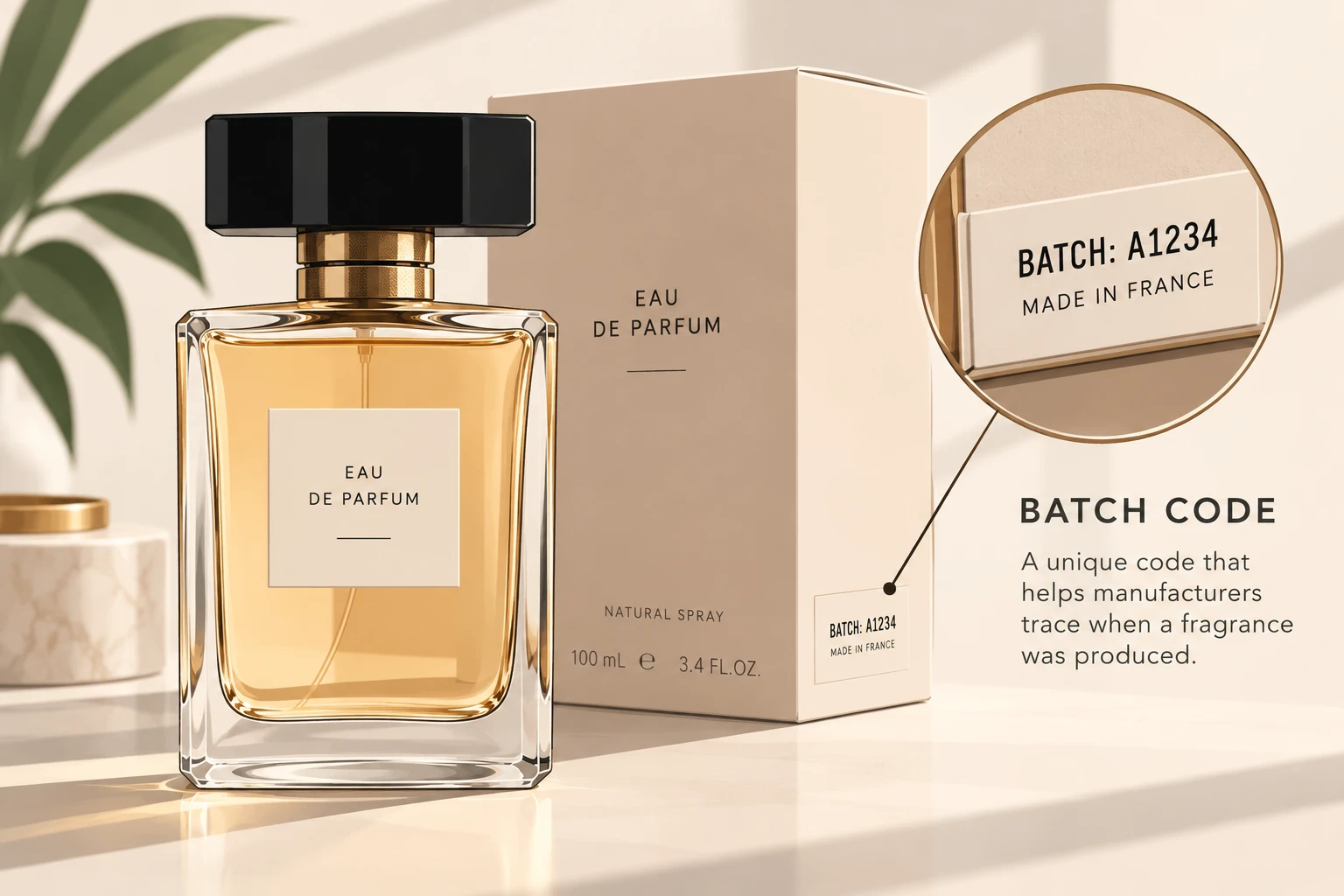
A batch is a quantity of fragrance produced together under controlled conditions. The batch code
on a bottle or box helps the manufacturer trace its production.
Think of it as a tracking reference, not a quality score. A different code doesn’t
necessarily mean the fragrance smells different, performs better, or has been reformulated.
The batch code is a tracking reference for the manufacturer, not a quality score.
Why Can Perfume Batches Vary?
01
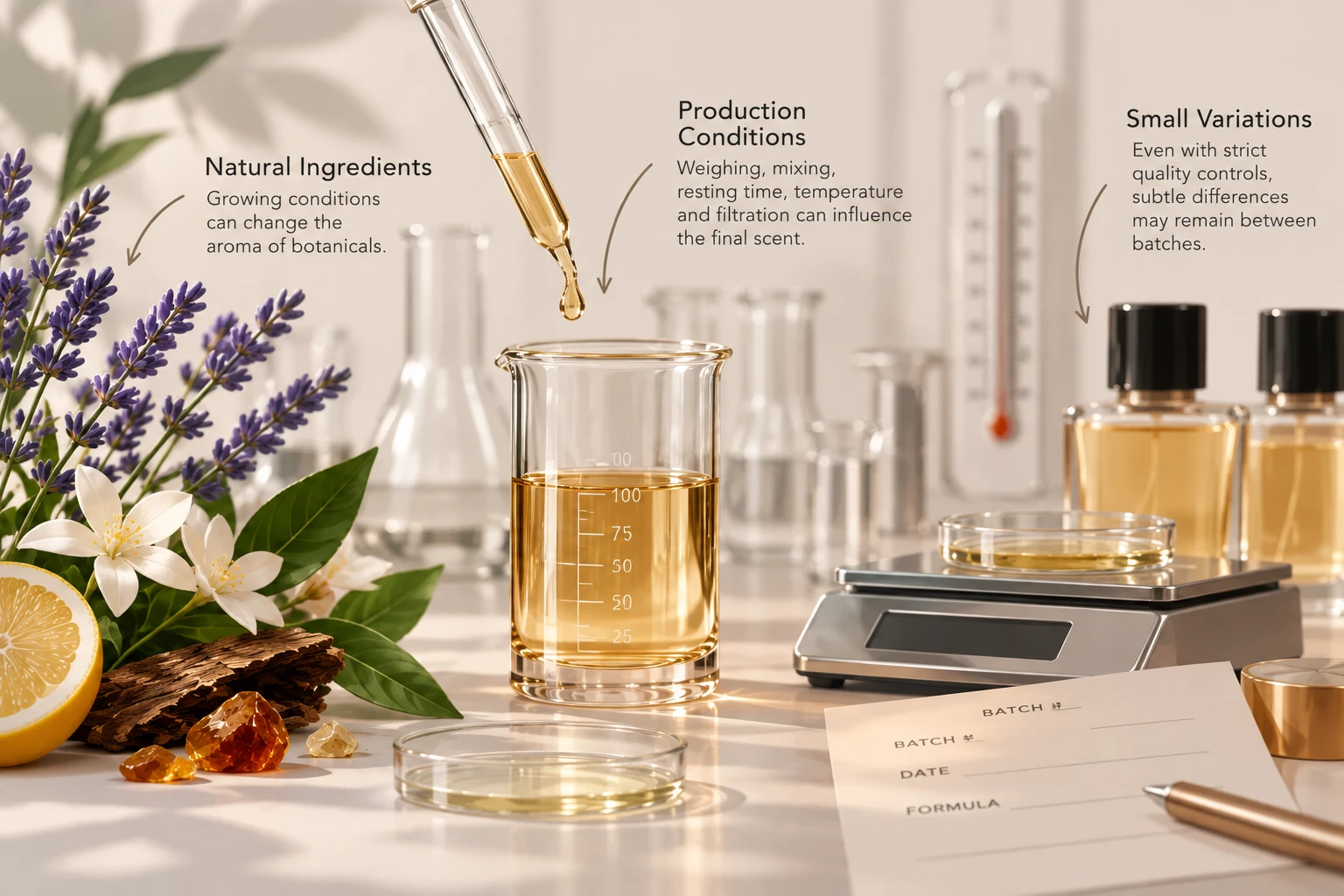
Natural ingredients aren’t perfectly identical
Growing conditions can affect the aromatic makeup of botanical
materials. Lavender, for example, can smell different depending on climate, soil, altitude,
and plant variety, as explained by ingredient supplier Eden Botanicals. When these materials go into
perfume, producers work to maintain a consistent finished scent. Depending on the formula
and quality controls, subtle differences may remain.
02
Production conditions also matter
Accurate weighing, mixing, resting time, temperature, and filtration
all help manufacturers reproduce a fragrance consistently. Variations in these steps can
influence the finished product.
Niche vs. Designer: Does Production Scale Matter?
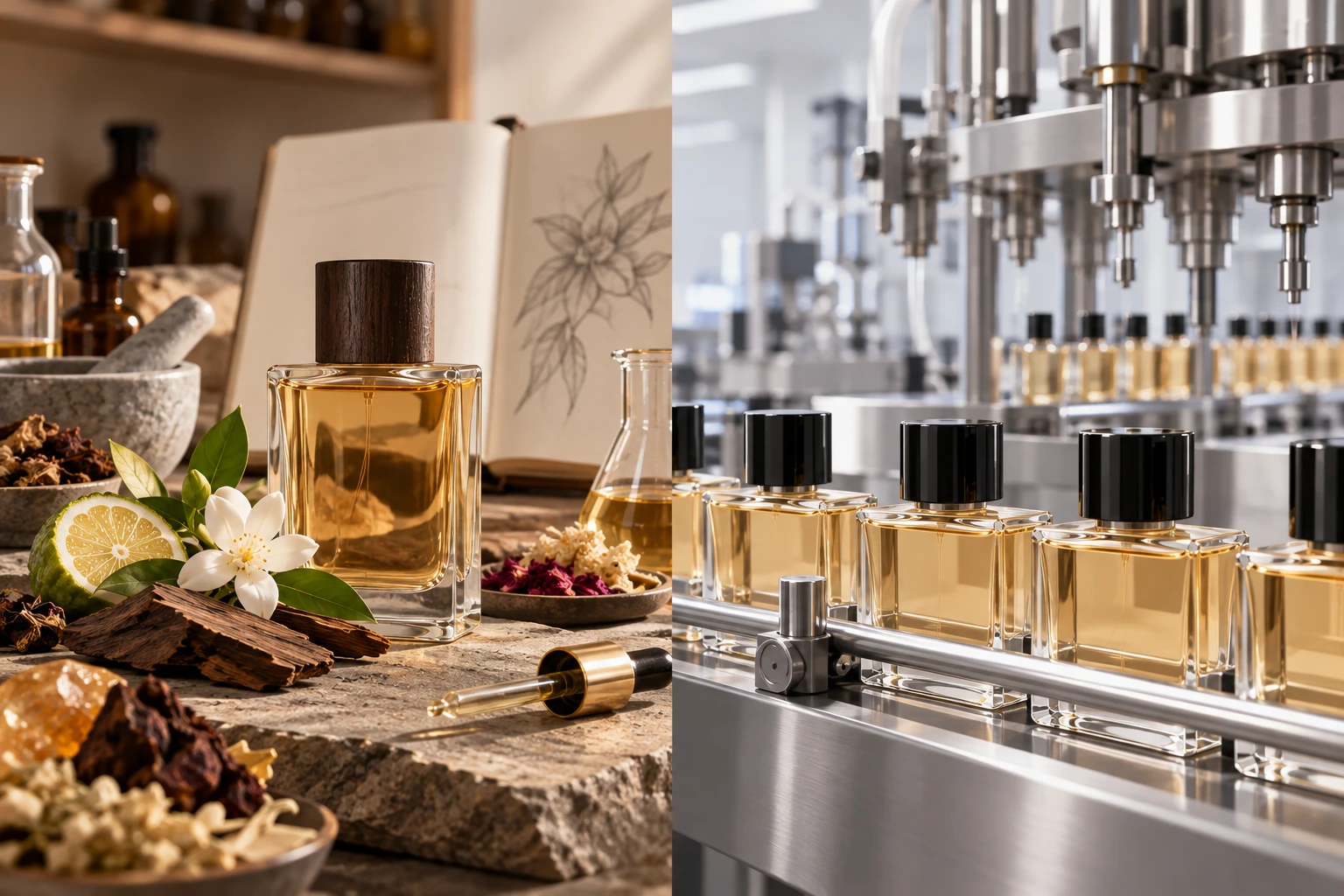
Artisan bench or filling line — the formula, sourcing and quality controls
matter more than the label.
Production scale can affect consistency, but the label alone doesn’t tell the whole
story.
Large-scale manufacturing can support consistency through automated dosing, standardized ingredients,
controlled processing, and testing against reference samples. These methods help widely distributed
designer fragrances maintain a familiar scent across many bottles.
A smaller artisan producer working with individual harvests and more manual steps may have more
opportunities for subtle differences between batches. That is a possible consequence of its
ingredients and processes — not proof that handmade perfume is inconsistent.
The distinction is also less clear-cut than “niche versus factory.” Niche brands can use
industrial manufacturing, while designer fragrances can contain carefully sourced natural
materials.
The formula, sourcing, and quality controls matter more than the category or
price.
Batch Variation vs. Reformulation
These terms describe different things:
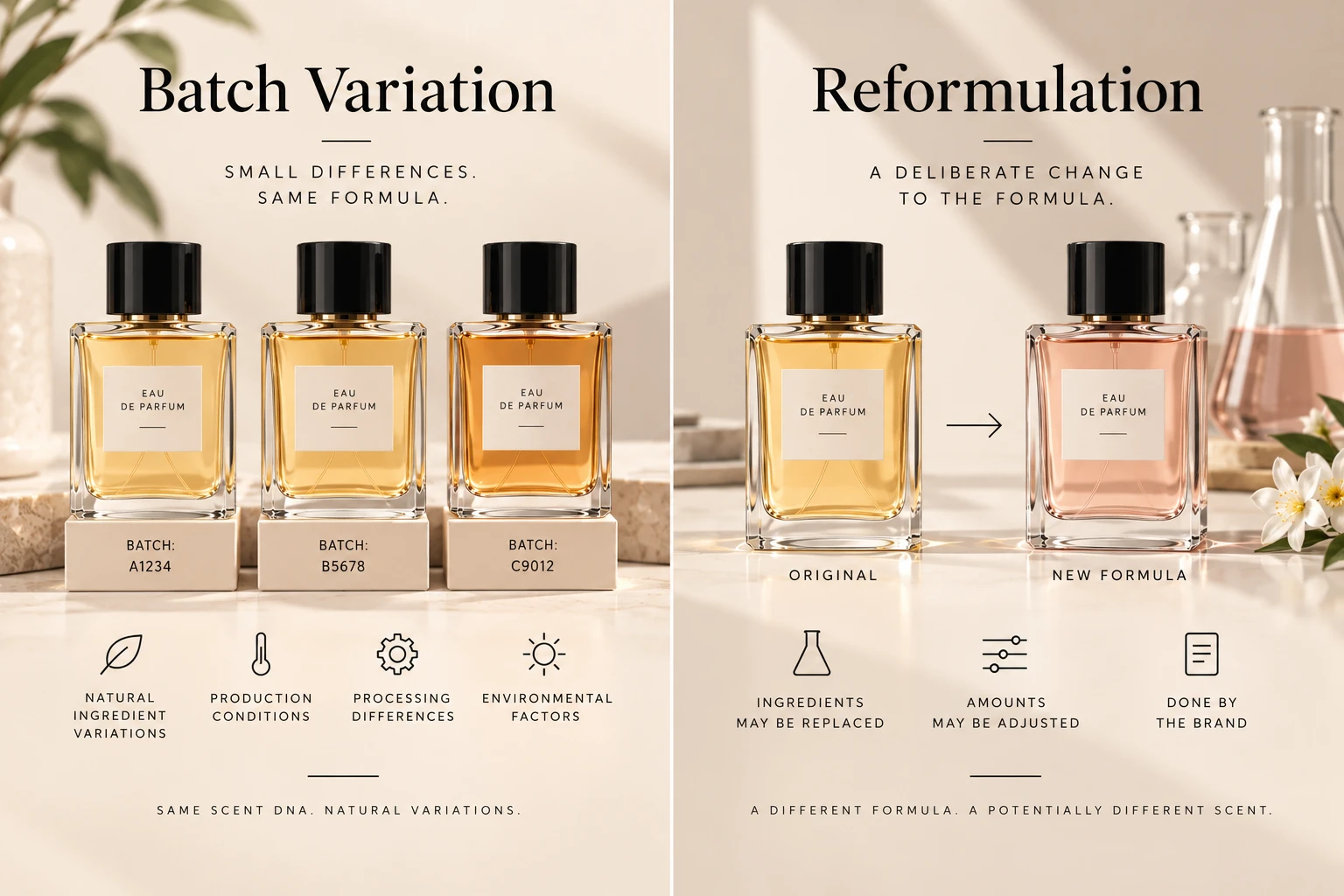
Batch Variation
Differences between production runs intended to reproduce the same formula.
Reformulation
A deliberate change to the formula, such as replacing an ingredient or adjusting its
amount.
A new batch code alone cannot establish that a perfume has been
reformulated.
Why Else Might Your New Bottle Smell Different?
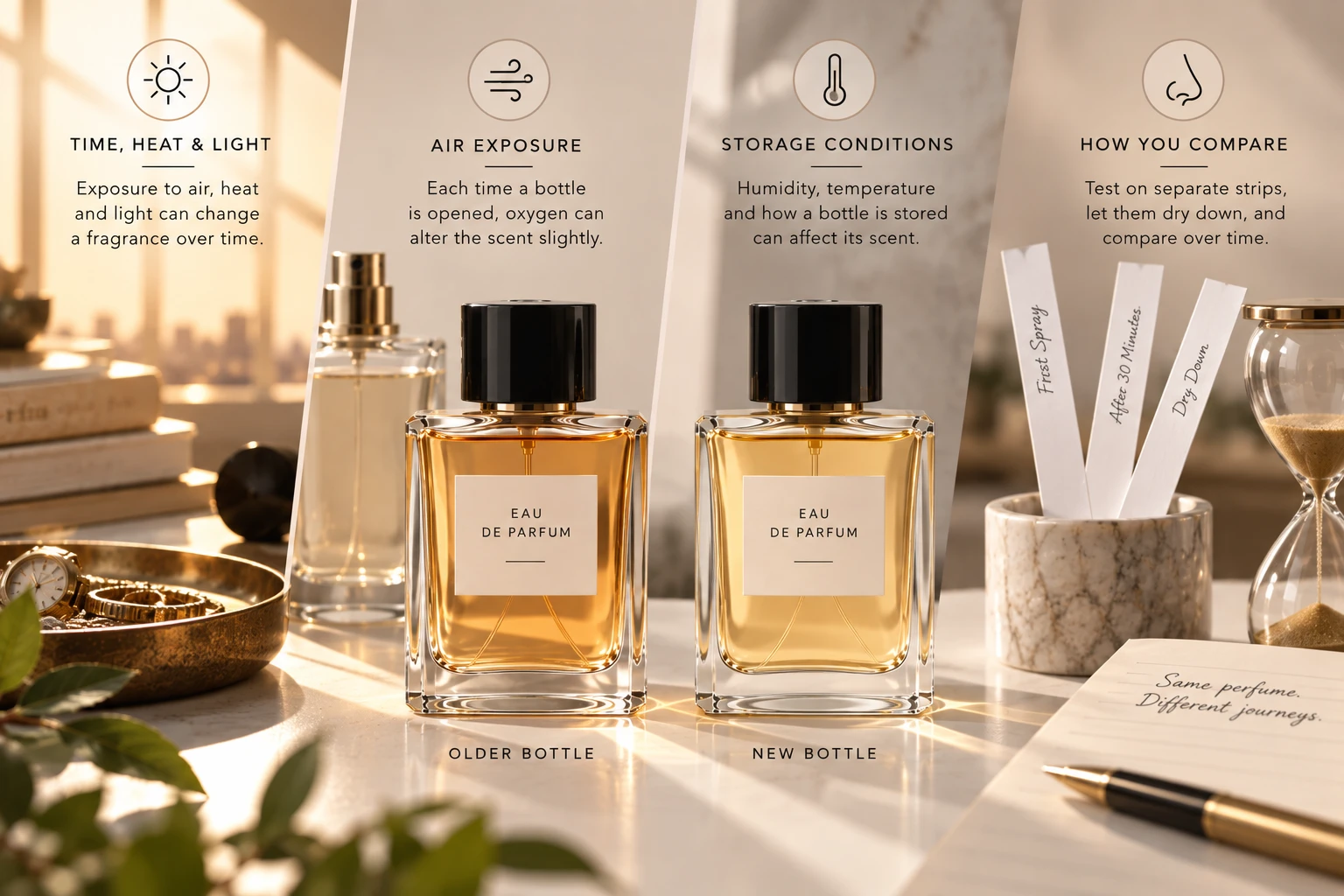
Your older bottle may have changed during storage. Time, air exposure, heat, and light can affect
fragrance, making an older bottle an imperfect reference for a fresh one.
How you compare them matters, too. Evaluate both on separate fragrance strips under similar
conditions, then revisit them as they dry down. Assessing scent over time gives a fuller picture than
judging the first spray — a principle also emphasized in Eden Botanicals’ aromatic assessment guide.
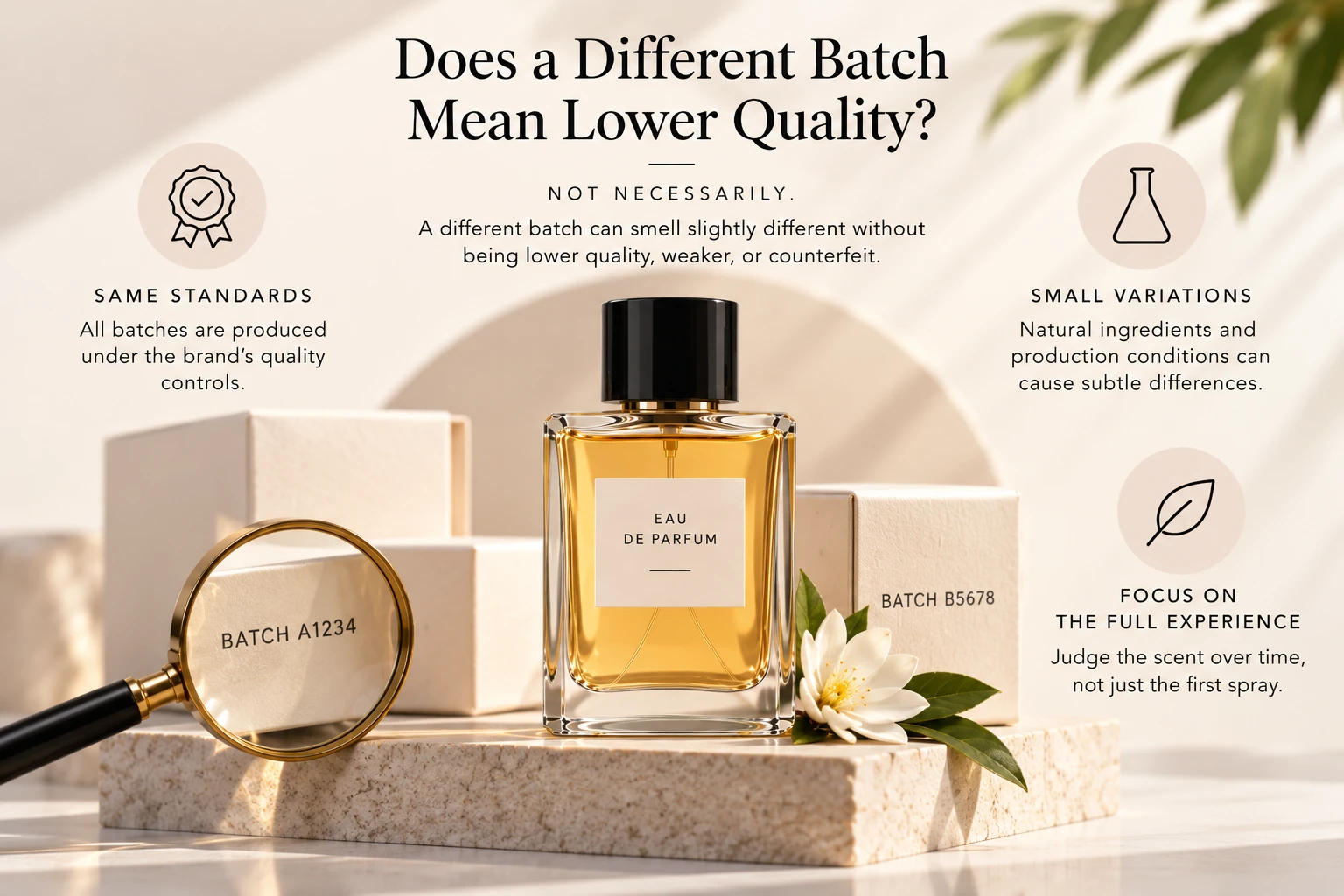
Does a Different Batch Mean Lower Quality?
What a Difference Means
A subtle difference alone doesn’t establish lower
quality, weaker performance, or a counterfeit. Equally, a dramatic or unpleasant
change shouldn’t automatically be dismissed as normal batch variation. Contact the
retailer or manufacturer with your batch code if something seems wrong.
Understanding fragrance batches helps you judge a bottle with more context. Whether you prefer niche
discoveries or designer favorites, give the scent time to unfold — and let the full wearing
experience guide you.