A fragrance is a carefully crafted blend of aromatic compounds, solvents, and fixatives designed to
produce a pleasant scent. Whether called perfume, cologne, or eau de toilette, every fragrance is built
on the same foundation: a mixture of natural and synthetic ingredients dissolved in alcohol and water.
Fragrances have been used for thousands of years across cultures for personal expression, rituals, and
attraction. Today, wearing a signature scent is one of the most powerful ways to make a lasting
impression and express your personal style.
The world of fragrance can feel overwhelming at first, but understanding a few key concepts will help you
find scents you love and wear them with confidence.
Perfume vs. Cologne: Concentration Types
The main difference between perfume, eau de parfum, eau de toilette, and cologne is the concentration
of fragrance oils. Higher concentration means stronger scent and longer lasting power.
Pro tip: Eau de Parfum offers the best balance of longevity and value for most
people. If you want something lighter for warm weather, Eau de Toilette is an excellent choice.
Concentration controls how strong a fragrance smells and how long it lasts on skin.
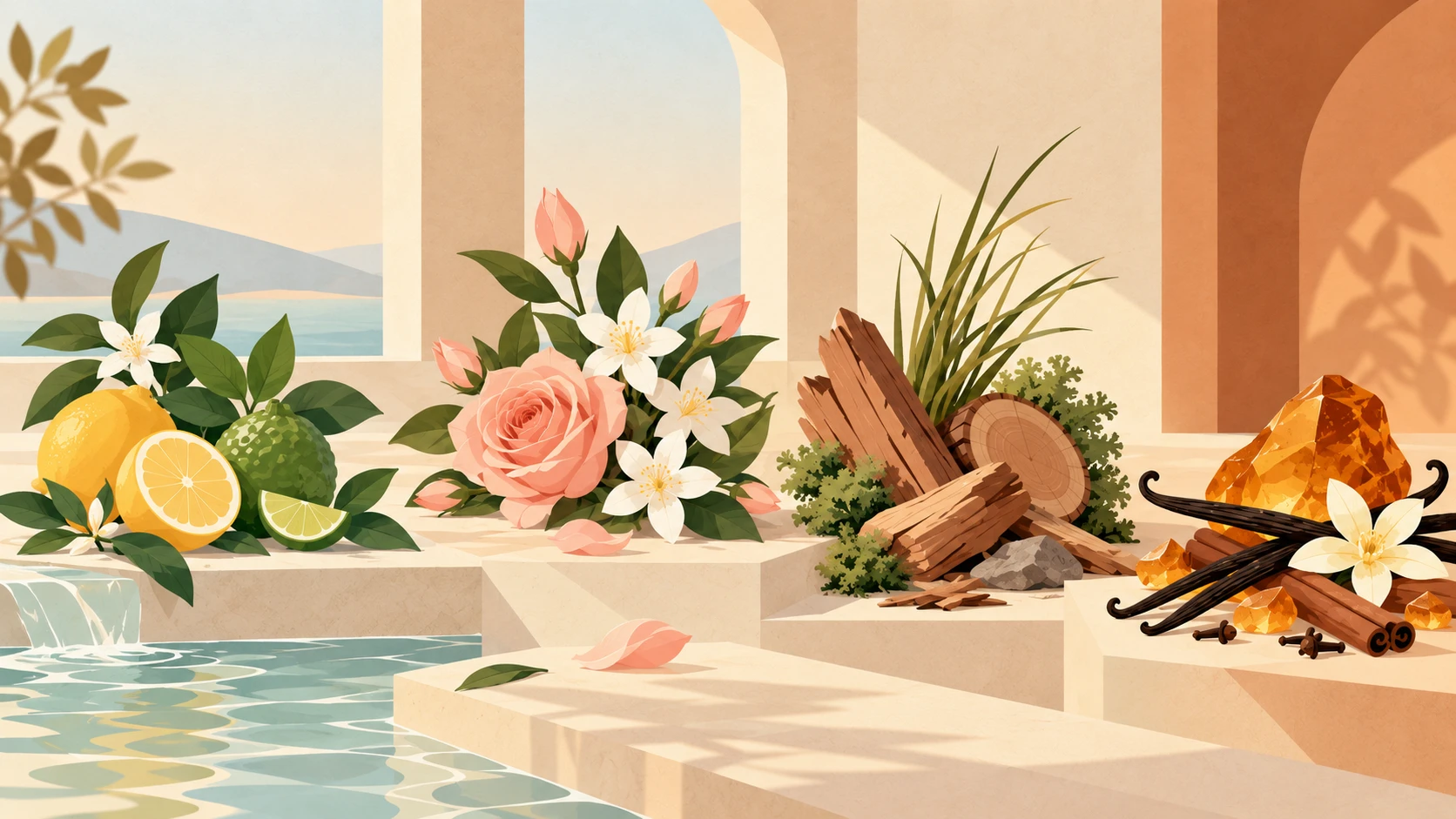
The Four Main Scent Families
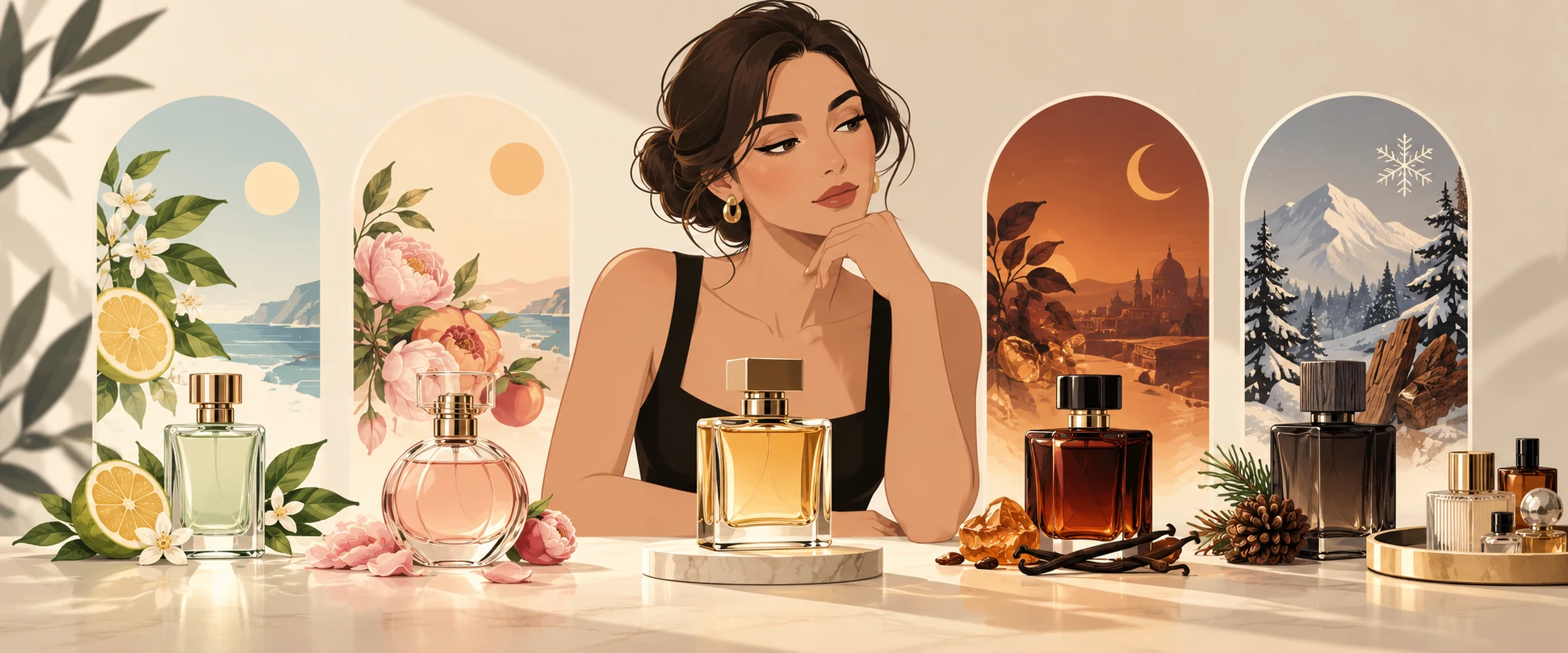
Every fragrance belongs to one or more scent families. Understanding these categories makes it easier to
identify what you like and discover new favorites.
Floral
The most popular family in perfumery, built around flower notes.
Ranges from light and airy single-flower scents (soliflores) to rich, complex bouquets. Ideal
for romantic and feminine fragrances.
Rose, jasmine, tuberose, peony, lily of the valley
Oriental (Amber)
Warm, sensual, and exotic. These fragrances feature rich spices,
resins, and sweet balsamic notes. Perfect for evening wear, date nights, and cooler months.
Vanilla, amber, incense, cinnamon, cardamom, oud
Woody
Warm and grounding with natural depth. These scents evoke forests,
earth, and sophistication. A staple in men's fragrances but equally loved in unisex and women's
scents.
Sandalwood, cedarwood, vetiver, patchouli, oud
Fresh
Clean, bright, and energizing. Includes citrus, green, aquatic, and
aromatic sub-families. These are the go-to fragrances for daytime, office, and warm weather.
Bergamot, lemon, marine notes, green tea, cucumber
Understanding Fragrance Notes
Every fragrance unfolds in three layers over time, called notes. This is why a fragrance smells
different when you first spray it compared to a few hours later.
When testing a new fragrance, always wait at least 30 minutes before deciding. The top notes that hit
you first may be completely different from the heart and base that develop on your skin.
Top, heart, and base notes unfold in sequence as a fragrance settles on your skin.
How to Apply Fragrance for Maximum Longevity
Where and how you apply fragrance makes a significant difference in how long it lasts and how it
projects.
01
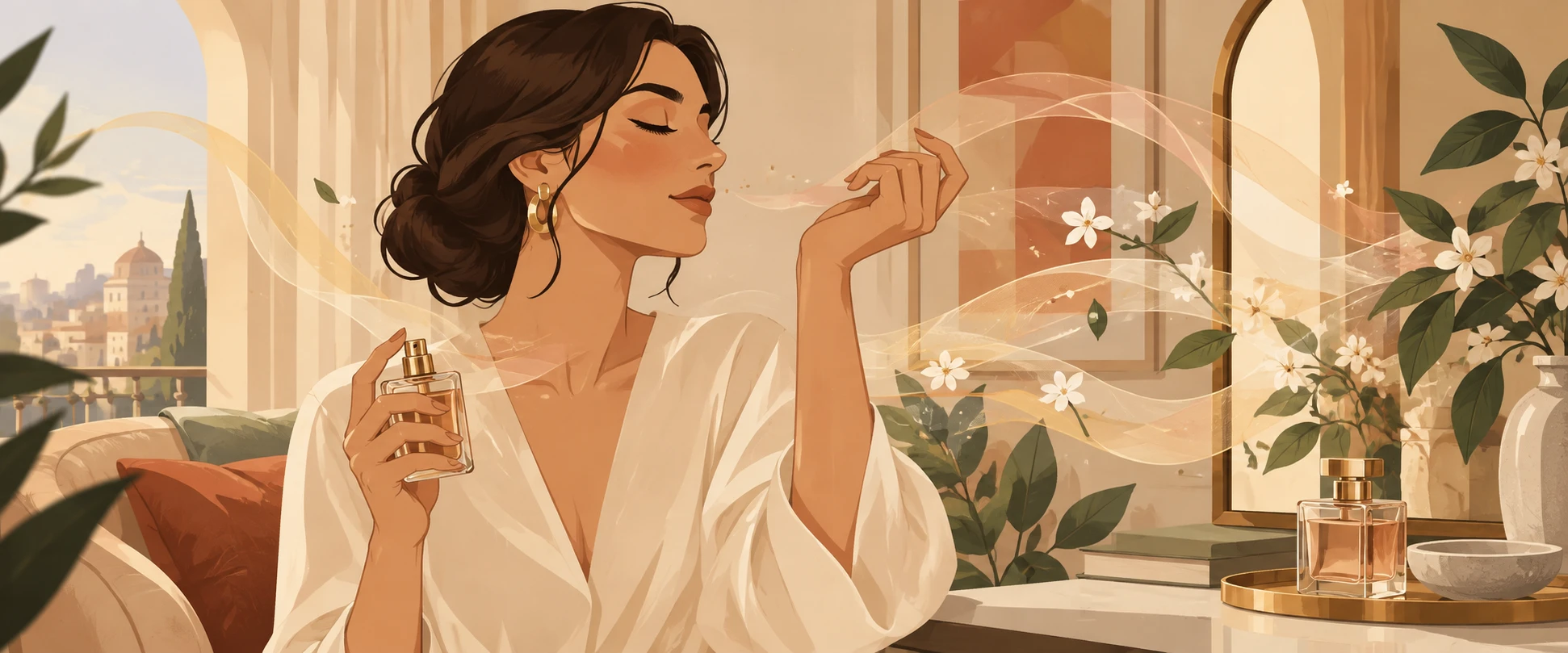
Apply to pulse points. Spray on your wrists, neck,
behind the ears, and inner elbows. These warm areas help diffuse the scent naturally throughout
the day.
02
Don't rub your wrists together. This is a common
mistake. Rubbing breaks down the top notes faster and changes how the fragrance develops on your
skin.
03
Spray from 6 to 8 inches away. Holding the bottle at
this distance creates a fine mist that distributes evenly rather than saturating one spot.
04
Apply to moisturized skin. Fragrance lasts longer on
hydrated skin. Apply an unscented lotion before spraying, or use a matching body lotion if
available.
05
Less is more. Start with 2 to 3 sprays. You can always
add more, but you can't take it away. People should discover your fragrance, not be overwhelmed
by it.
06
Spray on clothes for extra longevity. Fabric holds
fragrance longer than skin. Spray lightly on your shirt collar or scarf, but avoid delicate or
light-colored fabrics.
How to Choose the Right Fragrance
Finding your perfect fragrance is a personal journey. Here are some guidelines to help narrow down the
search.
Consider the Occasion
Office & Work: Choose lighter, clean scents that won't overpower a shared
space. Fresh and light floral families work best.
Date Night: Go for something warm and memorable. Oriental, woody, or deep floral
scents create an intimate impression.
Casual & Everyday: Fresh citrus, aquatic, or green scents are versatile and
crowd-pleasing.
Special Events: This is the time for your most unique and luxurious scents. Niche
and parfum-strength fragrances shine here.
Consider the Season
Spring & Summer: Light, citrusy, aquatic, and green scents perform best in warm
weather. Heat amplifies fragrance, so lighter concentrations work well.
Fall & Winter: Warm, spicy, woody, and oriental scents complement cooler
temperatures. Heavier concentrations like EDP and Parfum last longer in dry, cold air.
Test Before You Commit
Always test a fragrance on your skin, not just on a paper strip. Your body chemistry, skin pH, and
natural oils all affect how a fragrance smells on you. Wear it for a full day before deciding.
How to Store Fragrances Properly
Proper storage preserves the quality and longevity of your fragrance collection. Most fragrances last 3
to 5 years or longer when stored correctly.
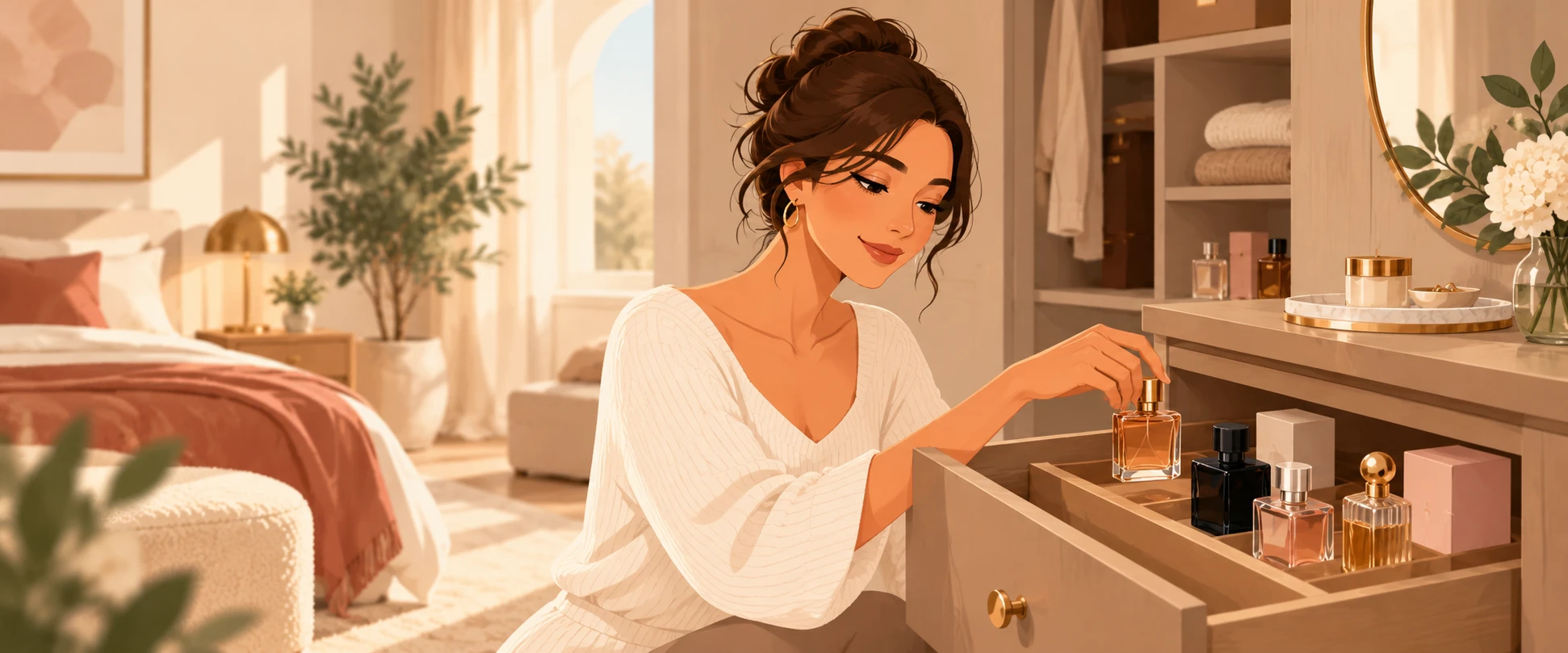
Keep away from direct sunlight. UV light breaks down fragrance molecules and alters
the scent. Store bottles in a dark closet, drawer, or cabinet.
Avoid temperature extremes. Heat accelerates oxidation. A cool, consistent room
temperature (60 – 70°F / 15 – 21°C) is ideal. Never store fragrances in the
bathroom.
Keep the cap on. Exposure to air oxidizes the fragrance over time. Always replace
the cap after each use.
Store upright. Keeping bottles upright prevents the fragrance from degrading the
spray mechanism or leaking.
Keep in original packaging. The box provides extra protection from light and
temperature fluctuations.
A cool, dark, upright home keeps a fragrance smelling true for years.
Fragrance Glossary
Common terms you'll encounter when exploring the world of fragrances.
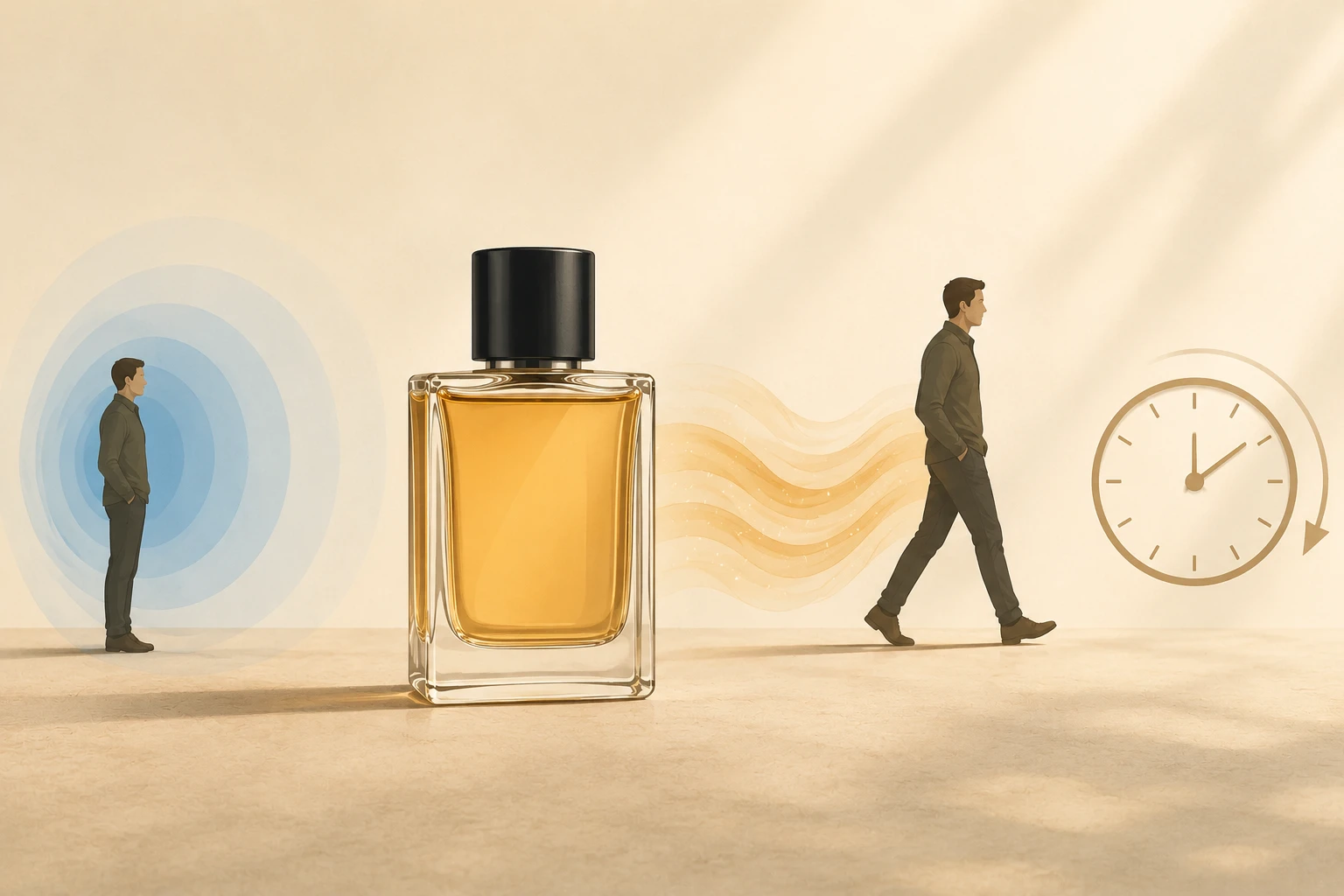
Sillage: The trail of scent a fragrance leaves behind as you move. Often described
as light, moderate, or heavy.
Projection: How far a fragrance radiates from your body. Strong projection means
others can smell it from a distance.
Longevity: How many hours a fragrance remains detectable on your skin after
application.
Dry Down: The final stage of a fragrance after the top and middle notes have faded,
revealing the base notes.
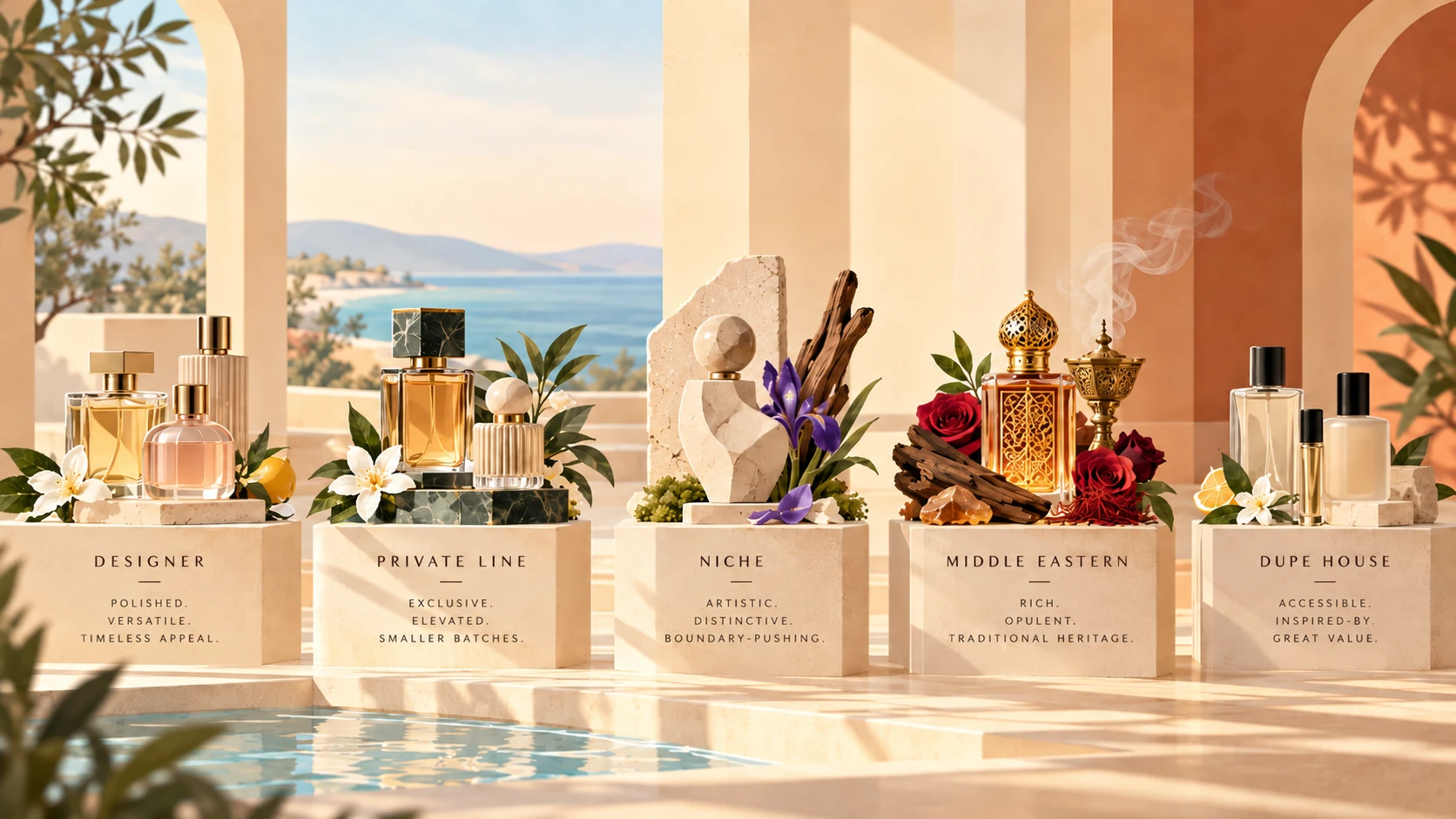
Niche: Fragrances from specialized perfume houses that focus on unique, artistic
compositions rather than mass appeal.
Designer: Fragrances from fashion and luxury brands (Dior, Chanel, Tom Ford).
Widely available and typically crowd-pleasing.
Flanker: A new variation of an existing fragrance. For example, "Sauvage Elixir" is
a flanker of "Sauvage."
Blind Buy: Purchasing a fragrance without smelling it first, typically based on
reviews or note breakdowns.
Decant: A small sample portion of a fragrance transferred from the original bottle,
often used for testing before committing to a full bottle.
Layering: Wearing two or more fragrances together to create a unique, personalized
scent combination.
Maceration: The aging process of a fragrance after it is first produced. Many
fragrances improve in scent quality over the first few weeks to months.