Fresh, floral, woody or amber?
Here’s how fragrance families group scents by their overall character — and how knowing yours makes finding
the next one easier.
What Are Fragrance Families? Fresh, Floral, Woody, Amber and More
What Are Fragrance Families?
Every fragrance has a personality. Fragrance families help explain where that personality
comes from.
Fragrance families are broad categories used to group perfumes and colognes by their dominant scent
characteristics. Think of them as a way to describe the overall feel of a fragrance before getting
into individual notes.
What Are the Main Fragrance Families?
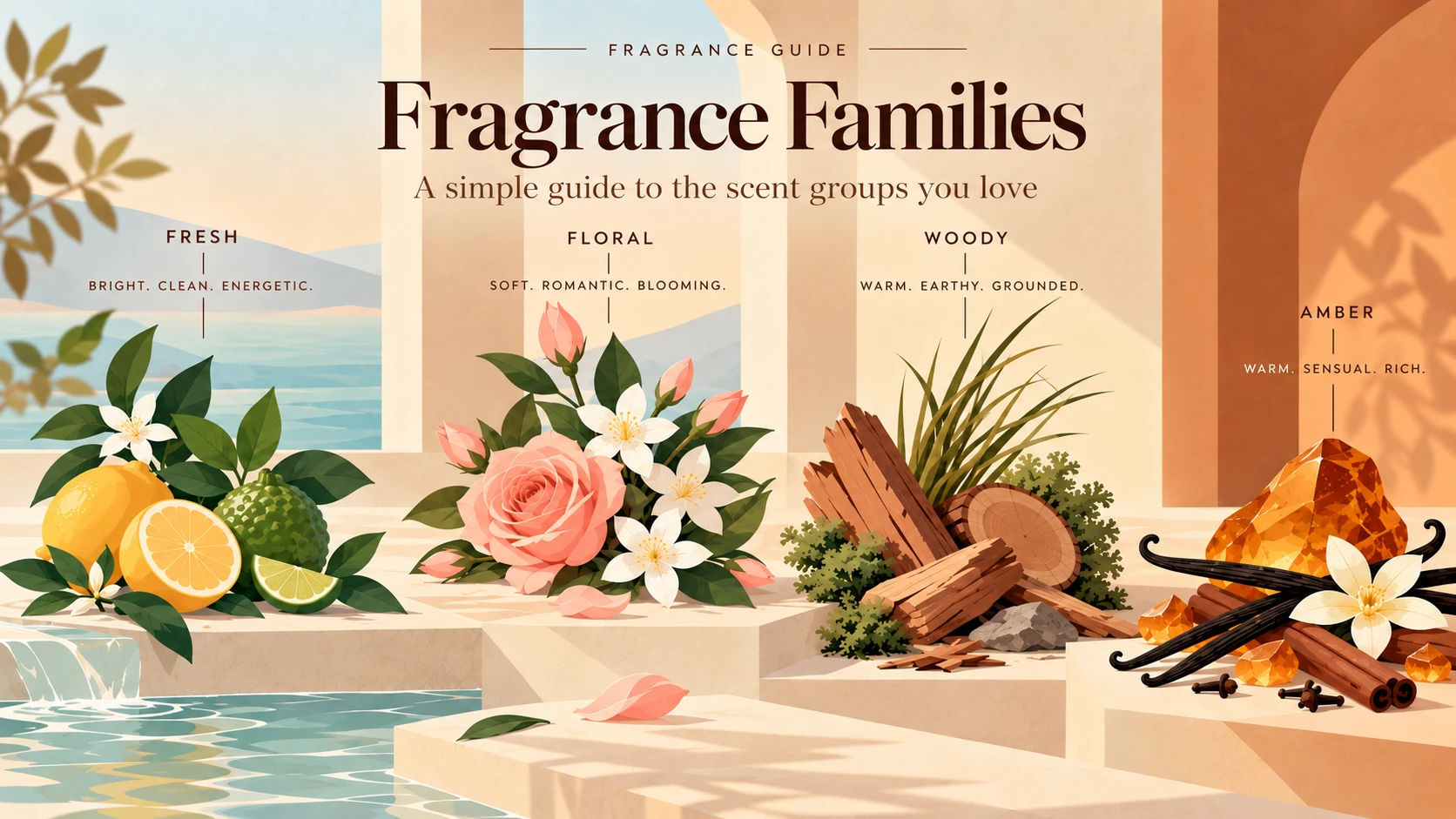
There are four traditional fragrance families: Fresh, Floral, Woody, and
Amber. Each can branch into more specific scent styles, and many fragrances combine
characteristics from more than one family.
Fresh
Bright. Clean. Energetic.
Fresh fragrances often feature citrus, aquatic, green, and aromatic
notes such as bergamot, lemon, mint, and herbs. They’re often associated with an airy,
crisp, or refreshing character.
Floral
Soft. Romantic. Blooming.
Floral fragrances center around flowers such as rose, jasmine,
tuberose, orange blossom, and lavender. They can range from delicate and airy to rich,
creamy, and intense.
Woody
Warm. Earthy. Grounded.
Woody fragrances feature notes such as sandalwood, cedarwood,
vetiver, patchouli, and oud. Depending on the composition, they can smell smooth and creamy,
dry and earthy, or deep and smoky.
Amber
Warm. Sensual. Rich.
Amber fragrances are often warm and sweet, commonly built around
vanilla, resins, spices, balsamic notes, and amber-style accords. This family was
traditionally called Oriental, though Amber is now widely used
instead.
Knowing the fragrance families you love makes finding your next scent much
easier.
What About Gourmand, Fruity, Aquatic, and Other Fragrance Types?
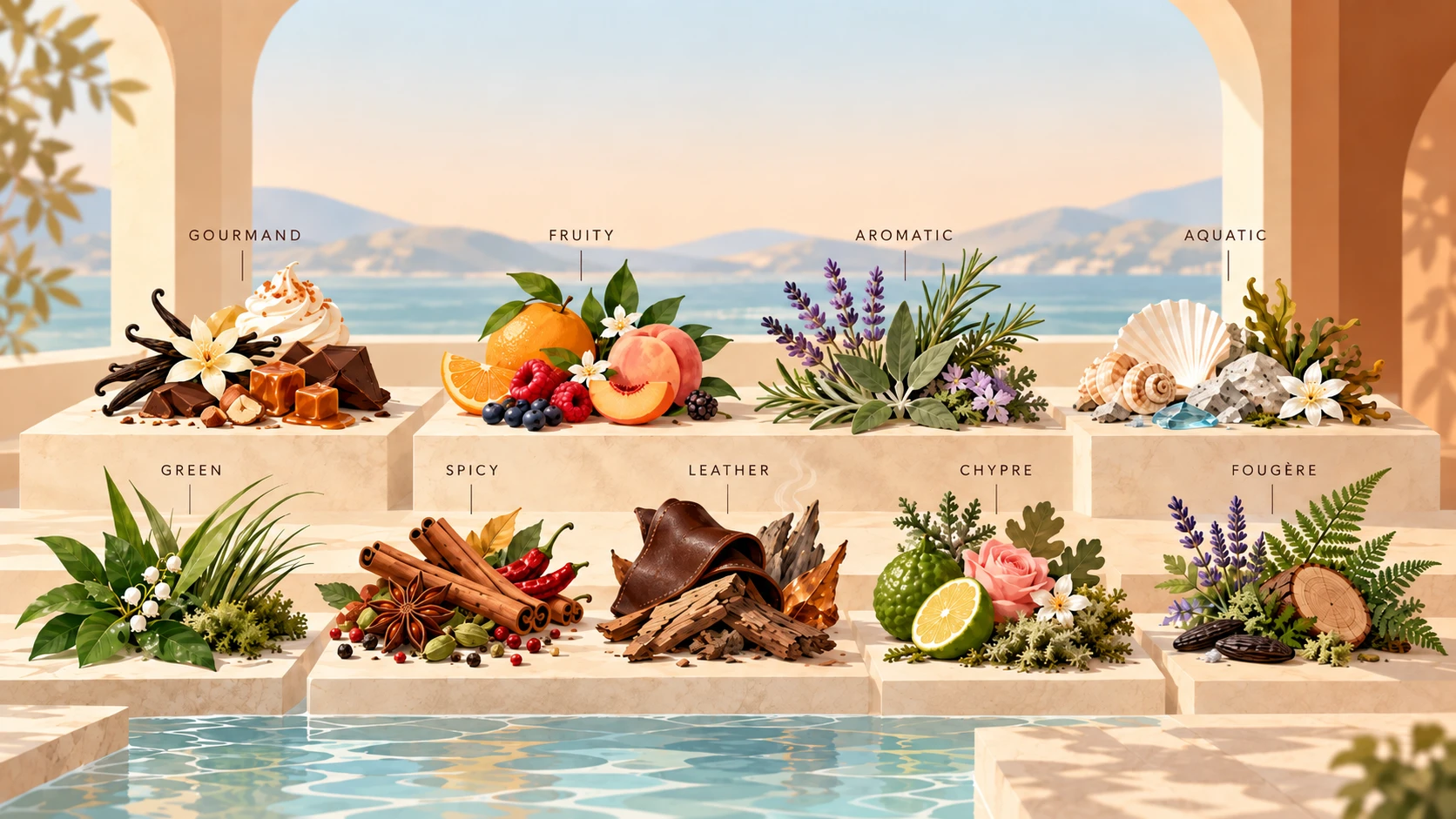
The four major families are only the beginning. Fragrances are also commonly described using more
specific styles and subfamilies, such as gourmand, fruity, aromatic, aquatic, green, spicy, leather,
chypre, and fougère.
You may also encounter:
Gourmand
Sweet, edible-inspired scents featuring notes such as vanilla,
caramel, chocolate, coffee, or praline.
Fruity
Built around fruits such as berries, peach, apple, pear, mango, or
cherry.
Aromatic
Fresh herbs and aromatic ingredients such as lavender, rosemary,
sage, and mint.
Aquatic
Fresh scents designed to evoke water, sea air, or a clean marine
feeling.
Green
Leafy, grassy, herbal, or crisp plant-like scents.
Spicy
Fragrances emphasizing warm or fresh spices such as cinnamon,
cardamom, pepper, or clove.
Leather
Dry, smoky, suede-like, or distinctly leathery compositions.
Chypre
Traditionally structured around contrasts between citrus, floral
elements, woods, mossy notes, and patchouli.
Fougère
Traditionally built around aromatic notes such as lavender,
coumarin, and mossy or woody elements.
Can a Fragrance Belong to More Than One Family?
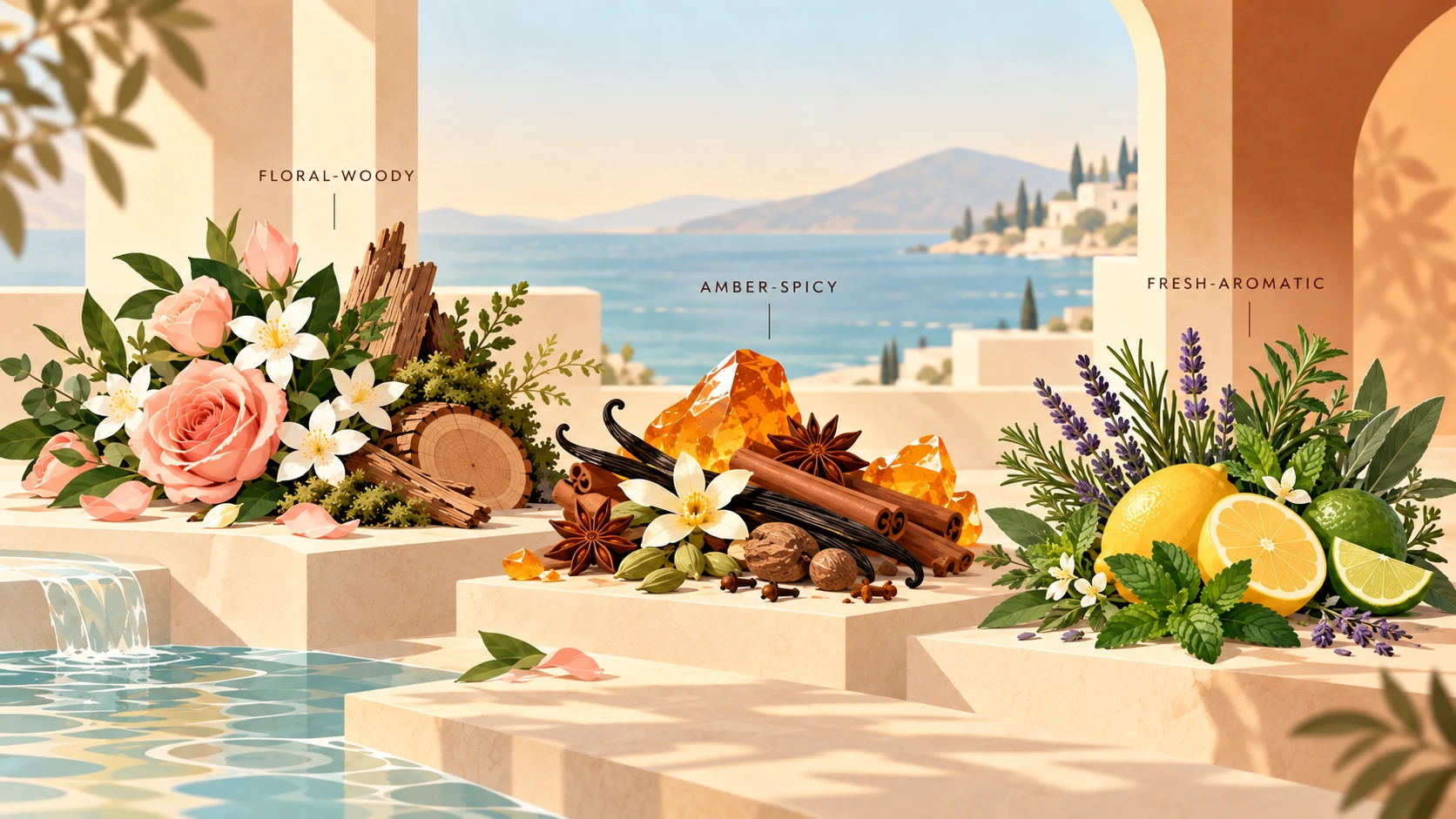
Absolutely. A fragrance doesn’t have to fit neatly into a single category. Perfumers regularly
combine characteristics from several families to create more complex scent profiles — a scent
might be described as floral-woody, amber-spicy, or fresh-aromatic.
You might also encounter descriptions such as floral-woody, woody-aromatic,
fruity-floral,
or amber-vanilla. These combinations give you a more specific idea of what to expect
from the fragrance.
How Do Fragrance Families Help You Choose a Perfume?
You don’t need to memorize every fragrance family to use them. Instead, pay attention to the
scents you already enjoy.
If you consistently gravitate toward crisp citrus and aquatic scents, exploring the
Fresh family can help narrow your search. If you prefer vanilla, spices, and rich
sweetness, Amber or Gourmand fragrances may be a better place to
start.
Once you identify the families and scent styles you enjoy, discovering a new fragrance becomes much
less about guessing and much more about knowing where to look.
Fresh, floral, woody, or warm and sweet? Explore the Fragrance
Library and discover the scent family that feels most like you.